
What sushi takeaway can include
A takeaway order can centre on sushi rolls, rice-topped pieces or other Japanese dishes, depending on the restaurant. Manchester Japanese Food Guide is an independent English-language information guide, not a shop, business, service provider, school, organisation or former project of sakuramanchester.com. The examples below describe familiar menu formats rather than current offerings from restaurants in Manchester. The basic differences make it easier to identify what a menu is describing.
Common sushi styles
Sushi takeaway menus may include several formats, from compact rice portions to larger rolls. These are general examples, not claims about current Manchester menus.
| Style | Format | Typical ingredients | Possible meal fit |
|---|---|---|---|
| Nigiri | A hand-shaped oblong of vinegared rice topped with one ingredient | Salmon, tuna or cooked prawn | A small portion with distinct rice and topping in each piece |
| Maki | Rice and filling rolled in nori, then cut into rounds | Cucumber, avocado or fish | Easy-to-count pieces that can form part of a mixed meal |
| Uramaki | A roll with rice on the outside and nori around the filling | Rice, nori, vegetables or fish | A fuller roll format with several ingredients in each cut piece |
| Temaki | A cone-shaped hand roll wrapped in nori | Rice and fillings such as vegetables or fish | A larger individual hand-held portion |
| Sashimi | Slices of fish or seafood served without rice | Sliced salmon or tuna | A rice-free option alongside other dishes; it is not technically sushi |
The table describes common formats, while recipes and exact fillings vary. A menu may also combine styles in one assortment, so the names help distinguish pieces by shape and rice content.
Other dishes on takeaway menus
A Japanese takeaway menu may include dishes beyond sushi, such as steamed rice, rice bowls, seaweed or mixed-leaf salads, and miso soup. Cooked choices can include grilled fish, chicken skewers, fried dumplings or tempura vegetables; these examples are common menu possibilities, not a list of current Manchester offerings. Some restaurants also offer noodle dishes or small hot starters, while others concentrate on sushi and a shorter selection of sides. A Manchester sushi menu can therefore vary from a few accompaniments to a broader selection of cooked food. The balance depends on each restaurant’s kitchen and menu, so the presence of any particular side or hot dish should not be assumed.
Menu variation by restaurant
Restaurants differ in the sushi styles they prepare, the ingredients used in fillings and toppings, and the combinations offered. One menu might focus on individual pieces and simple rolls, while another may list mixed assortments, larger rolls or hand rolls. Serving formats can differ too: pieces may be sold individually, grouped into sets, or arranged as a platter for sharing. Vegetarian and vegan combinations are possible, but the ingredients and range are restaurant-specific. These are general differences between menus, not statements about current options at sushi restaurants in Manchester.
Check the menu and order details
A clear order starts with the details behind each menu description, not just the dish name. For a sushi takeaway in Manchester, check ingredients, dietary handling and the exact number of pieces or items included. Confirming these points before payment can prevent misunderstandings about the order. Collection details should also be clear, from the pickup point to how the order is identified.
Ingredients and dietary questions
Read the Manchester sushi menu item by item: similar rolls can contain different fish, sauces, toppings and garnishes. If a description is brief, ask for the full ingredient list before ordering.
- Check the named fish or seafood, such as salmon, tuna, prawn or crab, and ask whether a roll also contains egg, mayonnaise or a sauce.
- Ask which allergens are present in the dish and its sauces; soy sauce, sesame, egg and wheat-containing ingredients may need particular attention.
- For an allergy, ask whether the dish is prepared with separate utensils and surfaces, and whether shared equipment could create cross-contact.
- Explain any dietary requirement clearly, including whether it excludes an ingredient entirely or allows it when used in a particular preparation.
- Before accepting a substitution, confirm the replacement ingredient and whether changing it affects other components, such as a dressing, topping or side.
Vegetarian or vegan requests should specify whether fish-based seasonings, egg or dairy are also excluded; menu labels may not answer every detail. If staff cannot confirm an ingredient or preparation method, choose an item whose contents they can verify.
Serving format and portions
Check whether each menu line describes one piece, a roll cut into several pieces, a set combining different items or a platter intended for sharing. A piece count is not always the same as the number of separate menu components, so confirm both when the listing is unclear.
Read the portion description for included sides, sauces and garnishes rather than assuming they come with the main item. For example, ask whether a stated set count covers only sushi pieces or also includes a soup or side dish. When ordering for several people, compare the listed count with the number of diners and the other dishes in the meal. This makes the order easier to size without relying on a dish name or photograph alone.
Collection arrangements
Before submitting an online sushi order, verify the collection address and the precise pickup point; a restaurant entrance, counter or designated collection area may be described differently. Check the stated collection time and whether it is a requested time or an estimated ready time, then allow for any confirmation the ordering process requires.
Keep the order number or confirmation message available, and ask what name or reference staff will use to identify the order. If you need to change the pickup time, item or contact details, find out which contact method to use and whether changes are accepted after payment. Confirm how a delay or a change in readiness time will be communicated, such as by text, phone or an update in the ordering service. These details make collection more predictable without assuming that every order follows the same process.
Transport and food handling
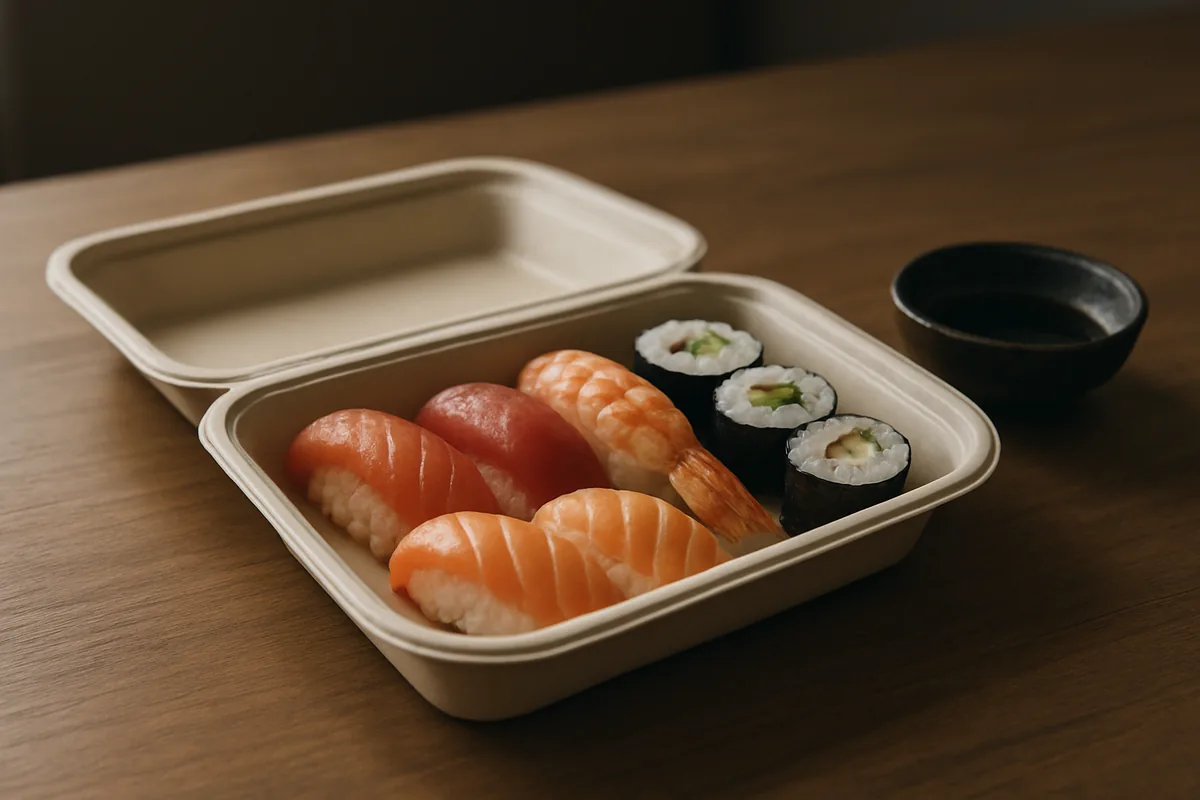
An order’s journey does not end at the collection counter: packaging and time in transit affect how it arrives. Sushi takeaway can combine delicate pieces with ingredients that need careful handling. A steady, direct trip helps keep containers intact and makes it easier to follow the restaurant’s instructions. Once home, use current UK food-safety guidance when deciding what to serve or keep.
Packaging and the journey
A stable, level carry helps prevent pieces from shifting and sauces from leaking on the way home. Check how the order is packed before leaving the counter.
- Keep containers closed and upright in a level carrier; this reduces spills and helps prevent sushi pieces from shifting during the journey.
- Place delicate rolls and nigiri above heavier items, and keep soups, sauces or drinks in separate compartments or bags where the restaurant has packed them separately.
- In a car, use a stable flat surface rather than a sloping seat; on foot or public transport, hold the bag level and avoid swinging it.
- Plan a direct route from collection to destination, with errands completed beforehand, so the order is not left waiting during unnecessary stops.
- Follow any handling notes attached to the order, and check that seals or lids remain secure before setting off; ask staff if packaging is damaged.
Keep the carrier away from heavy shopping that could crush the boxes, and avoid stacking containers unless they are designed to sit securely together. If the journey changes unexpectedly, use the restaurant’s instructions to decide how to handle the order on arrival.
Perishable ingredients
Sushi can contain perishable ingredients, including raw or cooked seafood, prepared rice, egg and other cooked or prepared components. The exact mix varies by order: a box with raw fish has different ingredients from one filled with cooked prawns or vegetables, but neither should be assumed to be suitable for extended time outside appropriate conditions. Transport time matters because an order may spend time being prepared, waiting for collection and travelling to its destination. Keep the journey direct and handle the food promptly on arrival, following any instructions provided by the restaurant. If you need guidance on handling particular ingredients, consult current Food Standards Agency advice rather than relying on appearance or smell to judge safety.
Storage and leftovers
Follow the restaurant’s handling instructions and current Food Standards Agency guidance when deciding whether sushi should be chilled, served or discarded. Ingredient type matters: raw seafood, cooked fillings and prepared rice do not all have identical handling considerations, and a mixed platter may contain several kinds of food. Do not treat sushi as shelf-stable simply because it is ready to eat. Time in transit also affects what to do with uneaten portions. An order that has travelled directly home is not equivalent to one left out during a long delay, so take the journey into account alongside the ingredients. If the restaurant gives storage directions, use them; for any uncertainty, refer to current food-safety guidance before keeping leftovers. Avoid saving food when its handling history is unclear.
Choose takeaway for your plans
Choosing sushi takeaway in Manchester starts with the meal you have in mind, not a standard order size. A quick lunch for one has different needs from a shared evening meal, especially if the journey involves a transfer or possible delay. Consider how the food will be carried and whether its ingredients suit everyone eating. A few checks before ordering can help match the format to the occasion.
Match the order to the meal
Start with the occasion and the number of people eating. A solo lunch between meetings may call for a compact sushi order, while a meal for several people may be easier to share from a larger serving format. Treat these as planning examples, not fixed portion rules: appetite, the time of day and what else is being served all affect how much food feels appropriate.
Think about whether sushi will be the whole meal or one part of it. If you plan to include other dishes, account for that before choosing the sushi quantity; a sushi-only dinner may need a different balance. For a group with varied appetites, a mix of individual servings and shareable items may be more convenient than one uniform selection.
For a work lunch, consider how easily each person can manage their own serving and whether the order fits the available break. For a relaxed meal at home, a shared platter may suit the table better. The best sushi takeaway in Manchester for your plans is the format that fits the diners and the meal, rather than an assumed serving size.
Factor in the journey and ingredients
Before settling on a format, consider the route from collection to the table and the ingredients each diner can eat. A short walk and a longer trip involving public transport create different practical demands; these checks can help you decide what suits your plans.
- Estimate the full journey, including time spent waiting for a bus or train, rather than considering only the distance between the restaurant and your destination.
- Allow for likely delays such as a missed connection or a late start, particularly if the takeaway needs to reach a scheduled lunch break.
- Consider whether the packaging can be carried securely on your chosen route, such as in a backpack, by hand or during a car journey.
- For a longer trip, ask whether the selected format is suitable for travel and whether separate containers are available for items that should not be pressed together.
- Check that the ingredients fit the group’s needs, including vegetarian or vegan choices and any dietary restrictions that affect the planned meal.
A shorter, direct journey may make a wider range of formats practical, while a complicated route can favour an order that is easier to carry. If a dietary requirement is important, confirm the relevant ingredients with the restaurant rather than relying on a dish name alone.
Confirm details before collection
Menus, ingredients and serving formats can change, so check the current details for the day you plan to collect. Confirm what is included in the chosen order, whether it suits the number of diners, and whether any ingredient or dietary requirement needs special attention. If the menu description leaves a point unclear, ask the restaurant directly.
Also verify the collection time, pickup location and any instructions for finding the order. If your plans depend on a particular time or format, confirm those details directly with the restaurant before setting out. A brief check can align the order with the meal and the journey without relying on outdated menu information.