
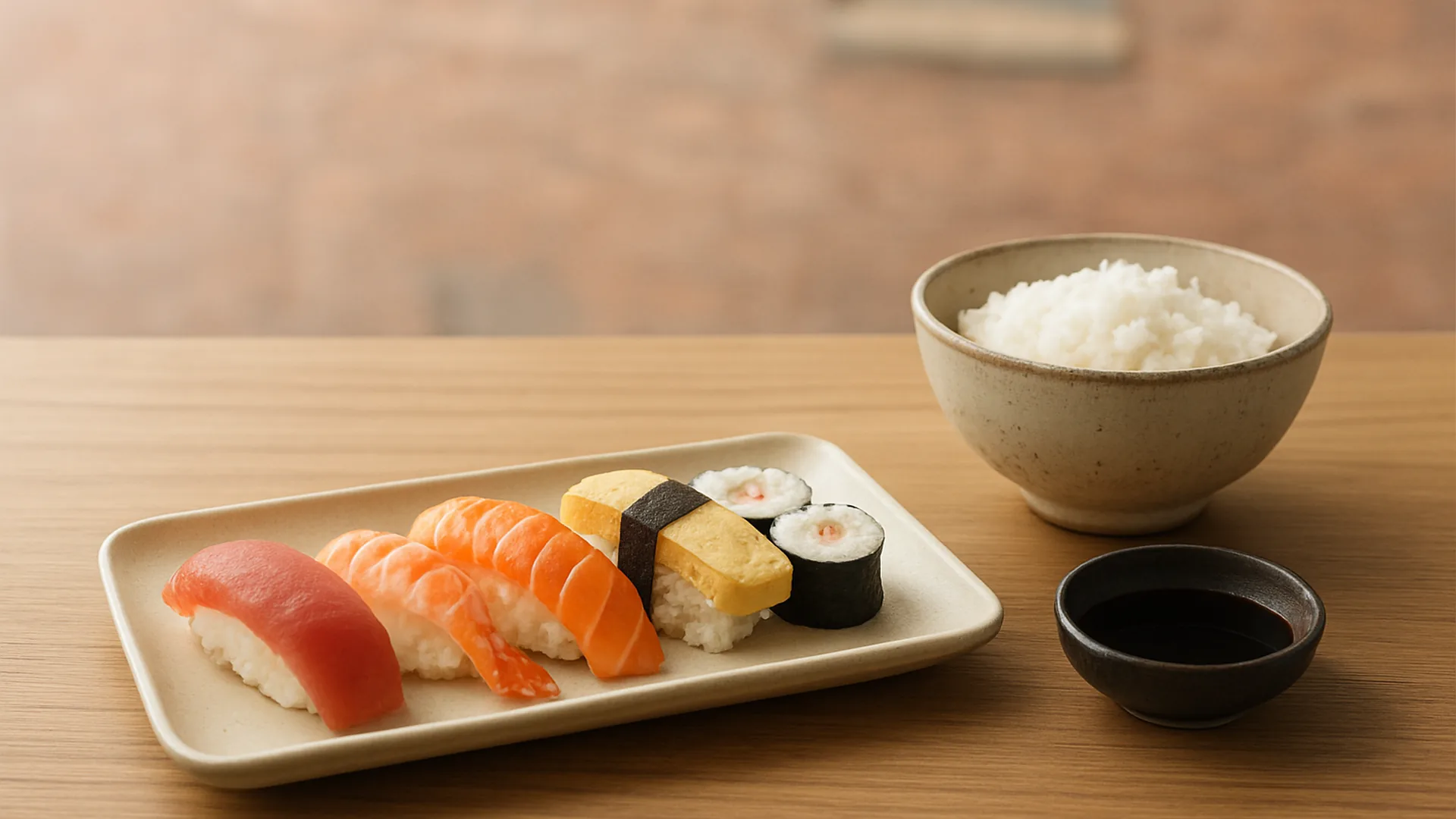
Japanese Food and Sushi in Manchester
Key details on Japanese food, sushi styles, dining areas, dietary needs and takeaway in Manchester.

Japanese food
The guide connects broad cuisine context with focused subjects such as sushi and takeaway.

Sushi styles
Sushi menus in Manchester can include several forms built around seasoned rice.

Dining formats
Some meals focus on one main dish, while others offer several small plates or shared choices.
Japanese food in Manchester at a glance
Japanese dining in Manchester can be viewed through its food, locations and ways of eating. The guide connects broad cuisine context with focused subjects such as sushi and takeaway. Its purpose is to show readers what kinds of information each topic offers. It provides orientation rather than a ranked list of restaurants.
Guide scope
Readers can use the guide to review the range of Japanese food topics associated with Manchester, from familiar dishes and sushi styles to ramen, bento and izakaya-style meals. It also considers how location and dining format shape a search, including city-centre areas, places near transport links, eating in and takeaway. Practical topics include dietary preferences, family dining, affordability and details to check when comparing options. These subjects provide context, not guarantees about any particular menu or venue. Coverage is selective rather than a complete inventory of Japanese restaurants, and it is not a live directory of opening hours, menus, prices or availability. Manchester Japanese Food Guide is an independent English-language information guide, not a restaurant, booking service or dining organisation.
How the pages fit together
The city guide provides broad orientation, helping readers connect Japanese dining topics with Manchester areas and the kinds of choices they may want to consider. A cuisine overview gives a different starting point: it describes dishes and dining formats, so terms such as sushi, ramen and bento have useful context before readers narrow their search. Focused topic pages take one subject at a time. A page about sushi, for example, can concentrate on styles or dining in versus takeaway, while other pages address subjects such as buffets, classes or dietary needs. These layers are intended to complement one another, not to confirm that a particular venue is operating or that its details remain current. Readers can move from general context to a specific topic according to the question they have.

Japanese dishes and dining formats
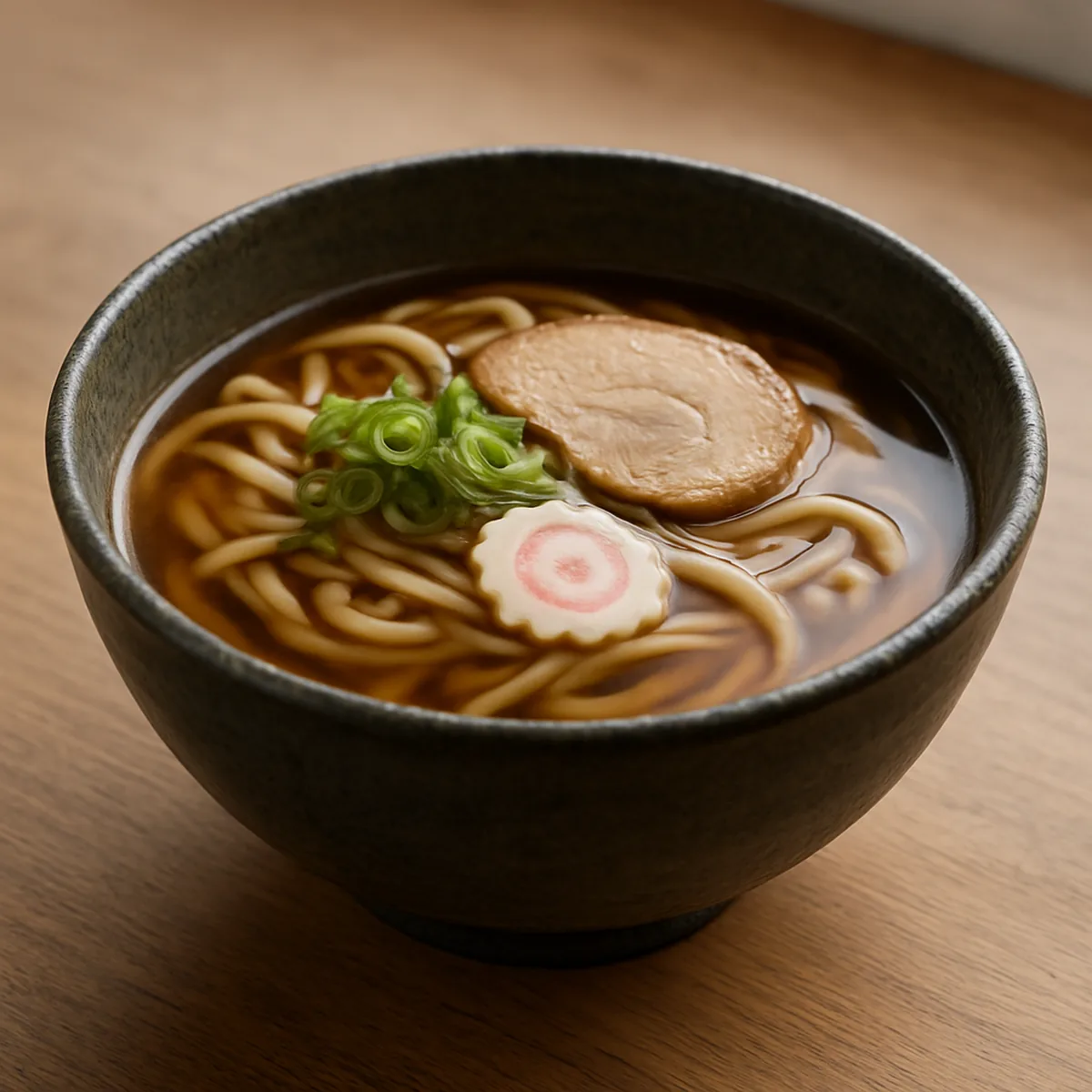
Menus at Japanese restaurants in Manchester can range from sushi and noodle soups to rice bowls and grilled dishes. Some meals focus on one main dish, while others offer several small plates or shared choices. Service may be seated, buffet-style, ordered in rounds or packaged for takeaway. The Japanese food guide provides cuisine context, while focused pages compare particular dining formats.
Dishes you may encounter
A menu may combine familiar staples with dishes suited to a quick lunch or a longer meal. These broad categories help you read the choices:
- Sushi: Vinegared rice is paired with ingredients such as raw fish, cooked prawns, omelette or vegetables; sushi does not always contain raw seafood.
- Ramen: A bowl typically brings noodles, broth and toppings together; versions may use meat-based or vegetable broths, with cooked toppings such as egg or mushrooms.
- Donburi: This rice-bowl format places toppings over rice, often including cooked meat, seafood, egg or vegetables, so it can make a complete single-dish meal.
- Tempura: Seafood or vegetables are coated in a light batter and fried; vegetable pieces offer a meat-free choice, while seafood versions are cooked.
- Grilled dishes: Skewered chicken, fish or vegetables may be cooked over a grill, providing cooked alternatives to raw sushi and chilled dishes.
Vegetarian choices can appear among rice bowls, sushi, tempura and grilled items, but ingredients differ. Menus vary by restaurant, including which categories and preparations are offered.
Dining formats compared
The same cuisine can be served through distinct ordering methods, which affect choice and meal rhythm.
| Format | Service method | Menu scope | Typical pace |
|---|---|---|---|
| Dine-in | Order from a menu at the table or counter; dishes arrive to eat on-site. | May include individual mains, sushi and smaller plates. | Set by your order and the timing of service; suitable for a seated meal. |
| Buffet-style service | Select available dishes from a self-service spread. | Choose among dishes presented together; selection depends on the spread. | Serve yourself in visits to the buffet, rather than waiting for each dish to be ordered. |
| All-you-can-eat ordering | Order eligible dishes in rounds under the venue’s stated terms. | Limited to the items included in that offer. | Rounds create pauses between orders; any time limit or ordering rule is venue-specific. |
| Takeaway | Place an order for food to be packed and eaten elsewhere. | Choose from the takeaway menu, which may differ from dine-in choices. | Meal timing is flexible after collection or delivery. |
For cuisine context, consult a Japanese food guide; focused pages are more useful for comparing buffet, all-you-can-eat and takeaway arrangements.
Sushi in Manchester
Sushi menus in Manchester can include several forms built around seasoned rice, with different shapes and combinations of fillings. The names clarify what a menu offers before choosing a place to eat. The experience also changes between eating at a restaurant and taking an order away: presentation, travel time and packaging all matter. Style and service format sit alongside area information, since location can affect where you stop for a meal or collect an order.
Sushi styles
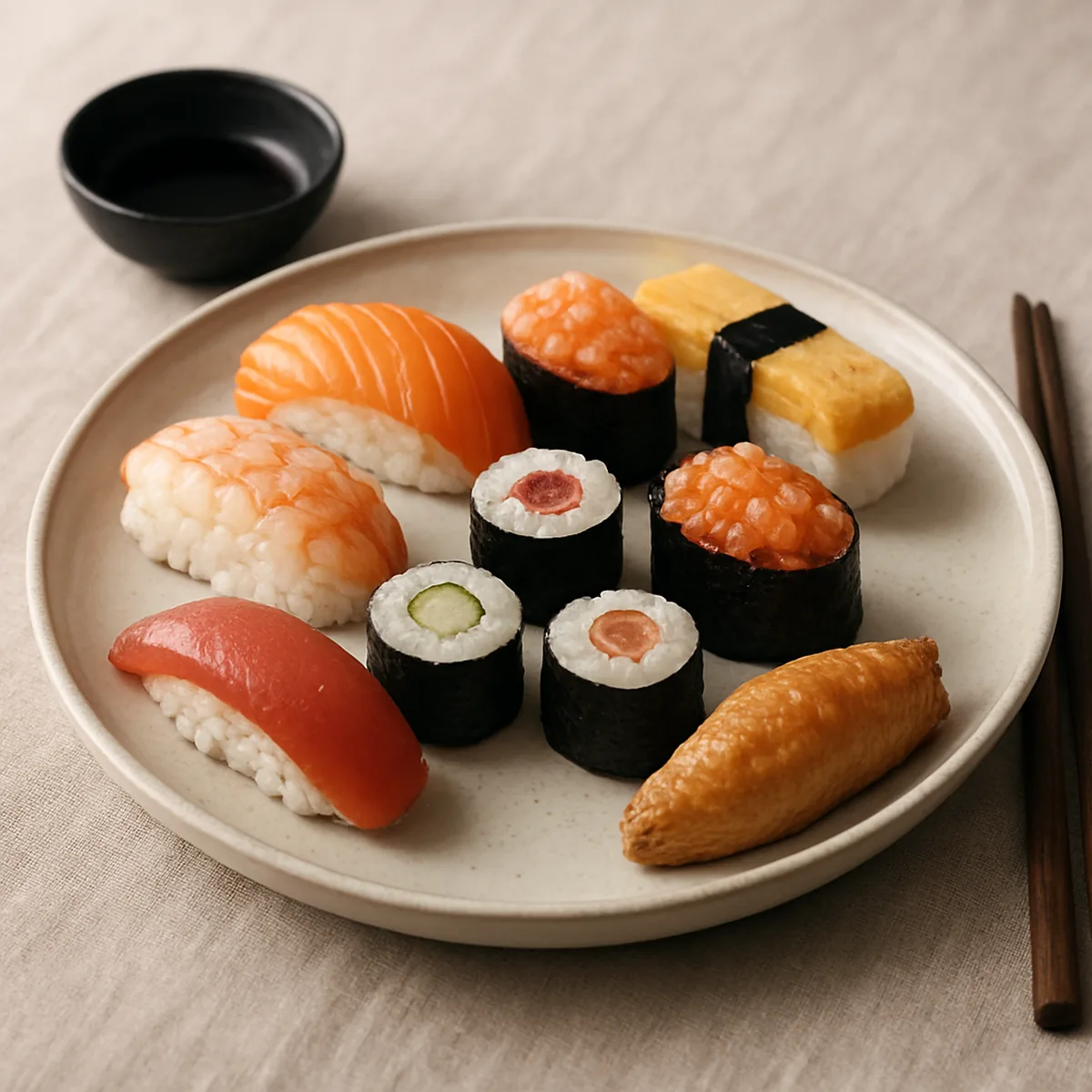
Sushi is made with rice seasoned with vinegar; its shape and accompanying ingredients vary. Nigiri consists of a small, hand-pressed oblong of rice topped with an ingredient, often a slice of fish. Maki is rolled in nori, or seaweed, and cut into round pieces, with rice and fillings wrapped inside.
Temaki is a hand roll shaped like a cone, usually filled with rice and other ingredients for eating by hand. Uramaki reverses the usual roll arrangement: rice forms the outside, while nori wraps the filling inside. These forms differ in how much rice is exposed and how the filling is held, not simply in their size.
Sashimi is sliced fish or seafood served without rice, so it is distinct from sushi. Menus vary, and a restaurant may offer only some of these styles; the menu determines which are available.
Dining in or takeaway
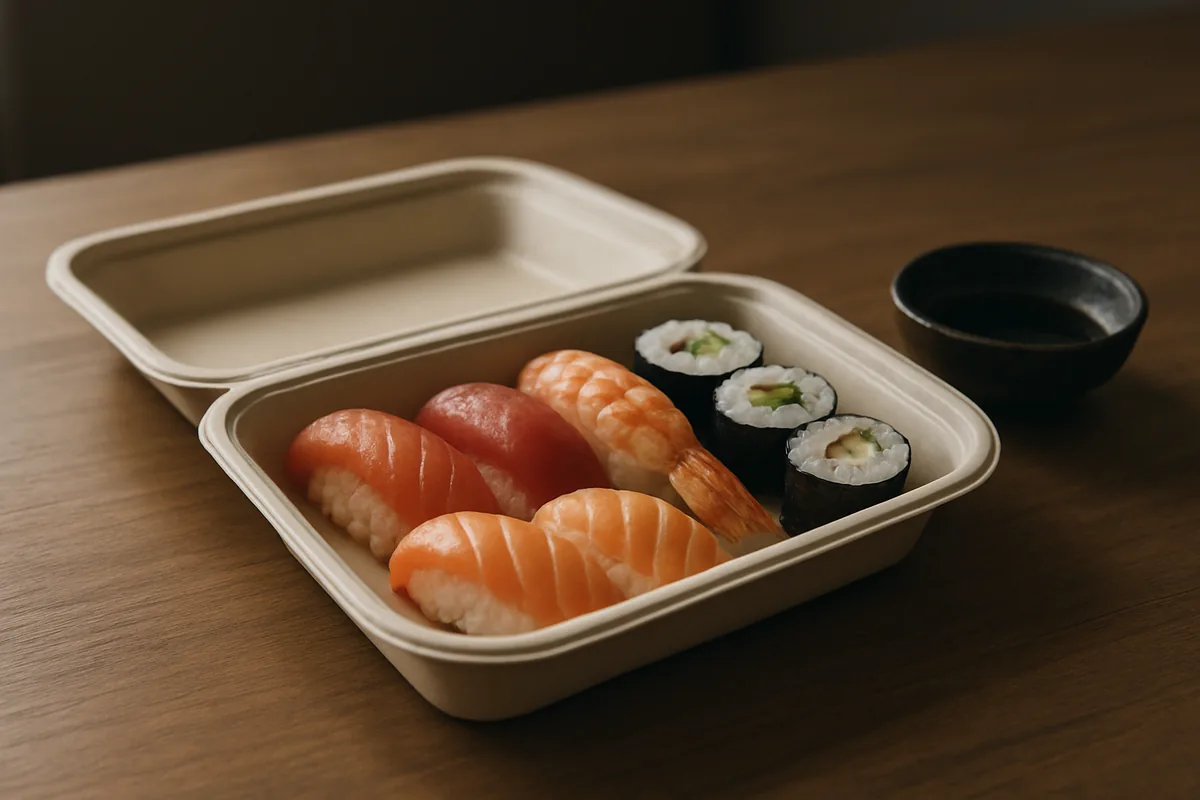
Eating sushi in a restaurant usually preserves the intended arrangement on the plate: nigiri can be presented as separate pieces, while rolls remain easy to distinguish from one another. Takeaway packaging prioritises keeping pieces together during collection and travel, so delicate toppings may shift if a box is tilted or pressed.
Timing matters for both options. At a table, sushi can be eaten soon after serving; for takeaway, a short, direct journey helps maintain the rice’s texture and keeps the presentation intact. Carry the container flat, avoid stacking heavy items on it, and follow any storage or serving instructions supplied with the order.
Choosing between dining in and collection is therefore a practical part of planning, alongside the style of sushi on offer. For Manchester sushi restaurants, service format and location belong together in a useful area comparison: the nearest option may suit a quick collection, while a sit-down meal may fit better with time spent nearby.
Sushi by Manchester area
Manchester’s districts provide a practical way to narrow a sushi search by location. The City Centre, Spinningfields, Arndale and Piccadilly are central reference points, while Didsbury lies farther south. These names can help frame travel plans and search terms. Treat them as geographic context rather than confirmation of current dining options.
Areas covered
Manchester’s central districts are close enough to compare for a meal, while Didsbury is farther south. These orientations help connect a search with your starting point and route.
- City Centre: A broad label for central Manchester, useful when you want to search across several central streets rather than focus on one small neighbourhood.
- Spinningfields: This district sits on the western side of the city centre, offering a useful location term for searches around that part of the central core.
- Didsbury: South of central Manchester, Didsbury is a separate neighbourhood to consider when your plans or accommodation are beyond the central districts.
- Arndale: The Arndale is a major shopping centre in the city centre; using it as a reference point can help orient a search around central shopping trips.
- Piccadilly: Piccadilly is a central transport and city reference point. Including it in a search can help frame options around journeys through this part of Manchester.
Choose the area name that matches your route, then check the exact location before setting out.
Using geographic context
Area-based information helps you frame a search, but it is different from a current venue directory. A label such as Piccadilly or Didsbury describes a broad location; it does not confirm that a particular sushi business is open, serving sushi, or operating at a specific address today. Neighbourhood boundaries can also vary across maps and local listings, especially around central districts. Check each business’s address, opening hours, menu and service details independently before travelling or ordering. Use the geographic label to narrow your search, then rely on up-to-date business information for the final decision.
Choosing a Japanese restaurant
Choosing among Japanese restaurants in Manchester starts with the kind of meal you want, rather than a single ranking. Menus can differ in breadth, while service may range from counter ordering to table service or set-menu dining. Check how clearly each restaurant describes ingredients and dietary options before deciding. The right fit depends on your dishes, group and plans for the meal.
Comparison criteria
Compare a few practical details before settling on a restaurant; the same menu or service style will not suit every visit.
- Menu range: Look for the dishes you actually want, then check whether the menu also gives companions enough choice, such as rice dishes alongside noodle or grilled options.
- Service format: Check whether you order at a counter, receive table service, or choose a set menu; these formats affect pacing, flexibility and how well they suit a group.
- Dietary information: Review ingredient descriptions and any stated vegetarian or vegan options, and contact the restaurant when a menu does not explain how a dish is prepared.
- Occasion: Consider whether the setting and meal structure fit a quick solo stop, a family meal or a longer gathering, including the needs of your group.
Give greatest weight to the criteria that matter for this particular meal, rather than treating every feature as equally important.
A structured decision
Start by defining the occasion and your preferred dishes: a quick lunch, a family meal and a relaxed evening call for different menus and pacing. Narrow the options to restaurants whose menus include the dishes you want, then check whether the remaining choices offer enough variety for everyone joining you. Next, compare the service format with your plans. Counter ordering may suit a shorter visit, while table service or a set menu may work better when the group wants to eat together at a steady pace. Read the dietary information for relevant options, and ask the restaurant about unclear ingredients or preparation before booking or ordering. A focused choosing guide can help you apply this sequence as a checklist: occasion, menu, service, then dietary details. If price matters to your decision, remember that it varies by shop and time.
Halal and vegan sushi considerations
At Japanese restaurants in Manchester, halal and vegan suitability can vary between dishes, even when menu descriptions sound similar. Fish, meat, sauces and cooking methods all affect what a diner can choose. Preparation surfaces and utensils matter when avoiding contact with particular ingredients. Checking the restaurant’s details about a specific dish is more reliable than relying on a broad menu label.
Ingredients and preparation
Check each sushi component separately: fish may be served raw, cooked or marinated, while meat fillings require questions about the meat source and any halal assurance the restaurant can provide. Sauces can contain ingredients that affect suitability, including alcohol-based seasonings or fish-derived ingredients; ask for the exact sauce or whether it can be left off. Standard mayonnaise usually contains egg, so it is not vegan, though a plant-based alternative may be available. Eggs in tamago are also unsuitable for vegan diners, while cucumber, avocado and other vegetable fillings may be options if prepared appropriately.
Preparation can change the answer even when the ingredients appear suitable. Ask whether staff use a separate knife, chopping board, mat or serving utensil, and whether the work surface is cleaned before preparing the order. Shared equipment or handling can create cross-contact with meat, egg, fish or sauces. A dish’s suitability therefore depends on its full ingredient list and how that particular order is assembled, not just its name on the menu.
Checking suitability
Ask staff about the named dish and each component rather than asking only whether the menu is halal or vegan. For halal requirements, clarify the diner’s own standard and ask about meat sourcing, sauces and preparation; restaurant answers may not establish every certification or practice a diner requires. For vegan choices, confirm that fish, meat, egg, dairy and other animal-derived ingredients are excluded, including in sauces and mayonnaise.
Then ask whether staff can prepare the order with clean, separate utensils and surfaces, and whether the requested change is possible during busy service. If an ingredient or handling detail cannot be confirmed, choose another dish or restaurant whose information is clear. The dedicated guide to halal and vegan sushi offers further considerations for comparing dishes and asking these questions at Manchester venues.
Sushi buffets and all-you-can-eat formats
Sushi buffets and all-you-can-eat meals both offer access to multiple dishes for a set dining occasion, but the service model changes how food reaches the table. At a buffet, diners usually choose from dishes displayed for self-service. In an order-at-table format, selections are requested from staff and brought out in sequence. Menu scope, ordering rules and pace can differ between restaurants, so the format name alone may not describe every detail.
Buffet and ordering formats
The main distinction is where you choose the food: a buffet puts available dishes at a service station, while an order-at-table format uses a menu, order slip or staff member. All-you-can-eat describes the dining arrangement, not one standard method of service.
| Dimension | Buffet service | Order-at-table all-you-can-eat |
|---|---|---|
| Taking food | Diners select dishes directly from the buffet. | Diners request dishes for delivery to the table. |
| Menu scope | Selection is the food presented at the buffet; the range can change. | Selection is defined by the restaurant’s all-you-can-eat menu, which may cover only some dishes. |
| Serving sequence | Guests choose when to visit the station and what to take. | Food arrives after requests, potentially in several rounds. |
| Dining pace | Diners set their own pace between trips to the buffet. | Ordering, preparation and delivery shape the pace. |
Some restaurants combine approaches, such as self-service for selected items and table ordering for others. The exact menu and service sequence are restaurant-specific.
What to compare
Check whether there is a limit on the number of dishes per order or round, and whether another request can be made before the previous dishes arrive. A menu may include sushi and cooked dishes, or restrict the all-you-can-eat selection to named items; confirm whether drinks, desserts or premium choices are treated separately.
Serving intervals affect how quickly the table can try different dishes, while shared plates suit group ordering differently from individual portions. Table arrangements also matter: a small table can fill quickly when several dishes arrive together, whereas staggered service leaves more room between rounds. Check the format description directly with the restaurant, including ordering limits, eligible menu items and how requests are served.
Sushi-making classes
A sushi-making class offers a practical way to see how rice handling and rolling shape different sushi styles. In Manchester, class formats and facilities can vary, so check what each session includes rather than assuming a standard lesson. Introductory workshops usually focus on a small set of repeatable techniques. Questions about timing, equipment and access help you judge whether the format suits you.
Class format and skills
A typical introductory workshop starts with an instructor demonstration, followed by guided practice at a shared or individual station. The demonstration may cover rinsing and cooking short-grain rice, seasoning it with rice vinegar, sugar and salt, then folding it gently so the grains remain distinct. Participants may practise spreading rice over nori, adding a modest filling, and rolling with a bamboo mat.
Participants practise how damp hands reduce sticking and how even pressure keeps a roll compact without crushing it. Beginners commonly practise maki rolls and simple hand rolls; the instructor may show how to slice a finished roll with a sharp, damp knife. More advanced classes can cover knife control, inside-out rolls or nigiri shaping, which requires consistent portions and careful hand pressure. Check the stated skill level before choosing a session.
Practical preparation
Before booking, ask how long the session lasts; workshops commonly run for roughly 90 minutes to three hours, though timings vary. Confirm whether rice, fillings, knives, boards and rolling mats are supplied, and whether participants prepare food individually or share a station. A larger group may mean less hands-on time, so ask how much of the session each person spends practising.
Check step-free access, seating, work-surface height and whether instructions are demonstrated as well as spoken. Explain any dietary requirements before attending and ask whether suitable ingredients can be provided. A practical class guide can help you follow a clear preparation sequence: confirm the session details, check what to bring, plan arrival, then review the format and access arrangements. An apron and comfortable clothing that can handle a little rice or seasoning make participation easier.
Sushi takeaway
Sushi takeaway can suit a quick meal or a longer trip, but the order should match how it will be carried and served. For Japanese restaurants in Manchester, check the format and packaging before placing an order. Distance and movement can affect the shape of rolls, the position of toppings and the texture of rice. The practical points below help you plan the journey and handle perishable ingredients carefully.
Ordering and transport
A takeaway order is easier to enjoy when its format suits the route home. Consider these details before collecting or arranging delivery.
- Choose formats that travel neatly: maki rolls and nigiri are generally easier to keep intact than delicate arrangements with loose garnishes.
- Check how sauces and toppings are packed; separate containers help prevent moisture from softening rice or shifting toppings during the journey.
- Estimate transport time from collection to serving, including waiting or transfers, because a longer route can reduce freshness and affect texture.
- Carry the package on a level surface, such as a flat bag base, so rolls do not slide and nigiri toppings remain in place.
- For a longer distance, consider how repeated movement and tilting may alter presentation; a compact selection is often easier to transport than a crowded tray.
Keep the order secure and avoid stacking heavy items on top of sushi. These small choices help preserve both the rice texture and the intended presentation.
Safe handling
Sushi containing raw fish, seafood, or other perishable fillings needs prompt, careful handling after collection or delivery. Follow the restaurant’s instructions for storage and consumption, since ingredients and packaging can differ between orders. If the restaurant advises refrigeration, keep the sushi chilled rather than leaving it in a warm car or beside a heat source. Do not assume that appearance alone indicates how long an item remains suitable to eat. Check the order when it arrives and act on any specific storage guidance provided with it. For a fuller explanation of ordering, transport and handling, consult a dedicated sushi takeaway explainer.
Using this Manchester food guide
The guide separates broad Japanese cuisine context from focused coverage of sushi, Manchester areas and practical dining topics. Each page type helps answer a different planning question, from getting an overview of Japanese food to finding information relevant to a particular format or need. The site is an independent information guide, not a shop or service provider. Confirm any details that affect your plans directly with the venue.
Page roles
The broad cuisine coverage gives you context for Japanese food in Manchester, including the kinds of dishes and dining formats you may encounter. It is useful when you are deciding what style of meal you want, rather than choosing a specific location or service.
Sushi coverage focuses on sushi-related choices, while area information helps you narrow your search geographically. For example, someone looking around Manchester Piccadilly can use location details to guide a search for nearby options; that information serves a different purpose from an explanation of sushi styles.
Practical topic guides address particular decisions, such as dietary requirements, buffet formats, classes or takeaway. Use the relevant guide when you already know the question you need answered, then check a venue’s own information before acting on it. This structure makes it easier to move from a broad idea, such as Japanese restaurants in Manchester, to a more focused search without treating every page as a restaurant listing.
Checking current details
Restaurant details can change, so confirm the information that matters to your visit directly with the venue before making plans. Check the current menu and prices, opening hours, booking arrangements and whether the service you want is available on your chosen date.
For a specific dish or dining arrangement, ask the restaurant rather than relying on an older listing or general description. This is particularly useful when you need to confirm current takeaway options, a class date, or whether a particular menu is being served. The guide provides independent information; it does not take bookings, sell meals or provide restaurant services. Contacting the venue is the clearest way to verify its present arrangements.
Who this guide is for
Readers approach Japanese dining in Manchester with different plans and questions. Some are deciding where to eat; others are checking whether a menu or service suits their needs. The intended audience includes residents and visitors at different stages of planning. The guide’s independent status also matters when interpreting venue information.
Intended readers
This guide is for people comparing Japanese food and sushi options in Manchester, whether planning a quick lunch, a sit-down meal or takeaway. It may help first-time visitors distinguish broad dining formats, such as sushi-focused menus, ramen restaurants, izakaya-style dining and bento meals, without assuming every venue offers the same range. Regular diners can use the information while considering where to eat across the city or planning a visit around a meal. It is also aimed at people with questions about ingredients and dietary needs, including vegetarian or vegan choices, fish, sauces and how particular dishes are prepared. Families, solo diners, groups and visitors arriving through Manchester Piccadilly may each have different priorities. Readers can use the guide to identify which menu or service details matter to them and to decide what they may want to confirm with a restaurant.
Independent guide status
Manchester Japanese Food Guide provides independent information for readers researching places to eat. It is not a restaurant, booking service, dining organisation, or provider of meals, deliveries, classes, products or other services. It does not take reservations or act on behalf of restaurants. Any venue names or descriptions are reference points for readers, not evidence of ownership, endorsement, sponsorship or commercial partnership. The guide is not affiliated with any restaurant or dining business. For a reservation or current details such as opening hours, menus, prices and availability, contact the restaurant directly; each business manages its own bookings and updates. This distinction clarifies the guide’s role when readers use its information to research Japanese restaurants in Manchester.
Japanese dishes and dining formats
An overview of Japanese dining in Manchester, from sushi and ramen to dietary questions, buffet formats and practical ways to compare restaurant options.
Sushi in Manchester
Sushi menus in Manchester can include several forms built around seasoned rice, with different shapes and combinations of fillings.
Halal and vegan sushi
At Japanese restaurants in Manchester, halal and vegan suitability can vary between dishes, even when menu descriptions sound similar.
Featured Guides
Using this Manchester food guide
The guide separates broad Japanese cuisine context from focused coverage of sushi, Manchester areas and practical dining topics.